Estimated reading time: 21 minutes
Food bloggers earn anywhere from $0 to over $10 million per year, with the median food blogger making around $9,169 per month according to a RankIQ survey of 803 bloggers. Most of that income comes from display advertising, which accounts for 42–44% of total food blog revenue. Your actual earnings depend on traffic volume, monetization strategy, and how long you’ve been at it.

That’s a wide range, obviously. And it’s the kind of answer that frustrates people who just want a straight number. But food blogging income truly is all over the map — and understanding why is more useful than a single figure.
Some food bloggers pull in seven figures. Others make $50 a month. The difference isn’t talent or even recipes. It’s usually traffic, the right ad network, and how many income streams a blogger has built over time.
This guide breaks down real earnings from food bloggers who’ve shared their numbers publicly, explains where the money actually comes from, and shows you what it takes to go from hobby blog to real income. Whether you’re thinking about starting a food blog or trying to grow an existing one, these numbers will give you a realistic picture of what’s possible.
Table of contents
- How Much Do Food Bloggers Actually Earn?
- Real Food Blogger Income Examples
- Where Does Food Blog Income Come From?
- How Display Ads Drive Food Blog Revenue
- How Much Traffic Do You Need to Make Money?
- What Affects How Much a Food Blogger Earns?
- How Long Does It Take to Start Earning?
- Food Blogger Expenses: What Cuts Into Your Earnings
- How to Increase Your Food Blog Income
- FAQ
- Start Building Your Food Blog Income
How Much Do Food Bloggers Actually Earn?
There’s no single answer because food blogger income varies enormously based on experience, traffic, and monetization approach. But we can piece together a realistic picture from available data.
ZipRecruiter reports the average annual pay for a food blogger in the United States at $62,275 per year (as of February 2026). That breaks down to roughly $5,189 per month. However, there’s a huge spread: the 25th percentile earns around $40,000, while top earners (90th percentile) bring in $124,500 annually.
A RankIQ survey of 803 bloggers found that food bloggers had the highest median income of any blogging niche at $9,169 per month. That’s notable, food consistently outperforms other blog categories like travel, personal finance, and lifestyle.
Food Blogger Income Tiers
Here’s a general breakdown of where most food bloggers fall:
| Income Tier | Monthly Earnings | Typical Profile |
|---|---|---|
| Beginner | $0–$500 | Under 10,000 monthly page views, using Google AdSense or no ads |
| Growing | $500–$2,000 | 10,000–50,000 page views, early monetization |
| Established | $2,000–$10,000 | 50,000–200,000 page views, Mediavine or Raptive, 2–3 income streams |
| Professional | $10,000–$50,000 | 200,000–1M+ page views, multiple income streams, brand deals |
| Top Earner | $50,000+ | 1M+ page views, diversified revenue, possible team support |
Most food bloggers who earn a full-time income land somewhere in the “Established” to “Professional” range. The top earners get the headlines, but they represent a small fraction of all food blogs.
Quick Tip: The RankIQ survey also found that 72% of bloggers earning at least $2,000 per month were on either Mediavine or Raptive (formerly AdThrive) — not Google AdSense. The ad network you choose has a direct impact on how much you earn.
Real Food Blogger Income Examples
Numbers are more meaningful with context. Here are real earnings from food bloggers who’ve publicly shared their income data, organized from top earners down to growth-stage bloggers, so you can find your level.
Top Earners ($20,000+/month)
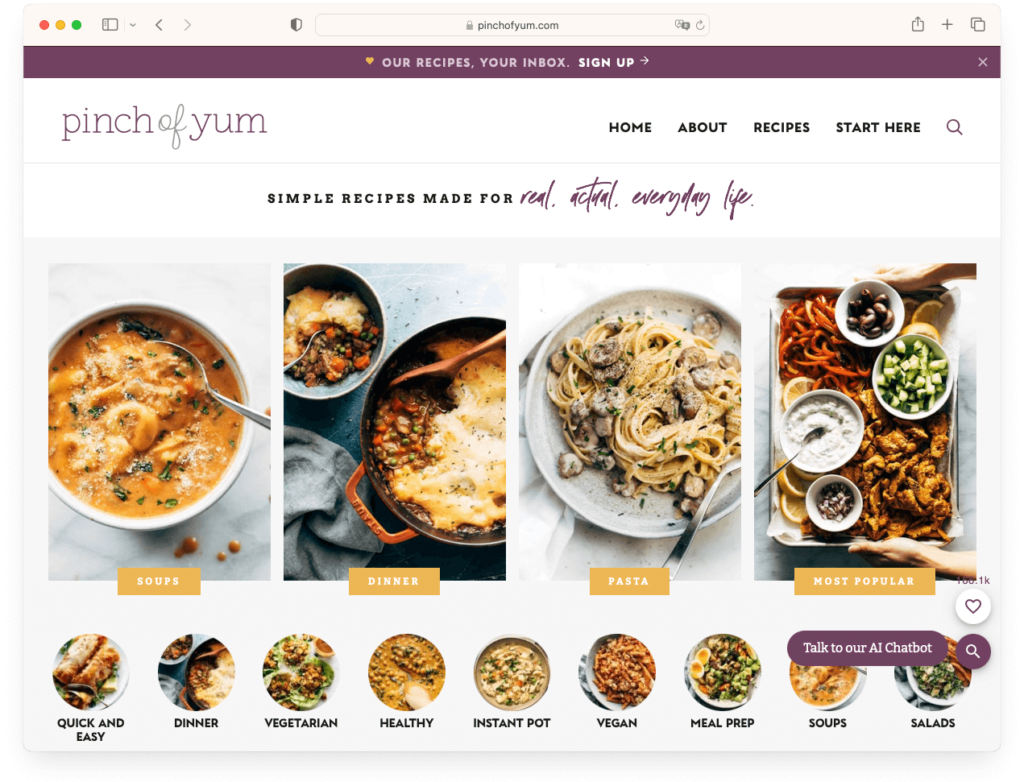
Pinch of Yum, the blog run by Lindsay Ostrom, is perhaps the most well-known success story in food blogging. The blog reported earning $90,000 per month in 2019 and an extraordinary $10.5 million in 2021. That’s exceptional, but Pinch of Yum had been running since 2010 and built a massive content library and audience over more than a decade.
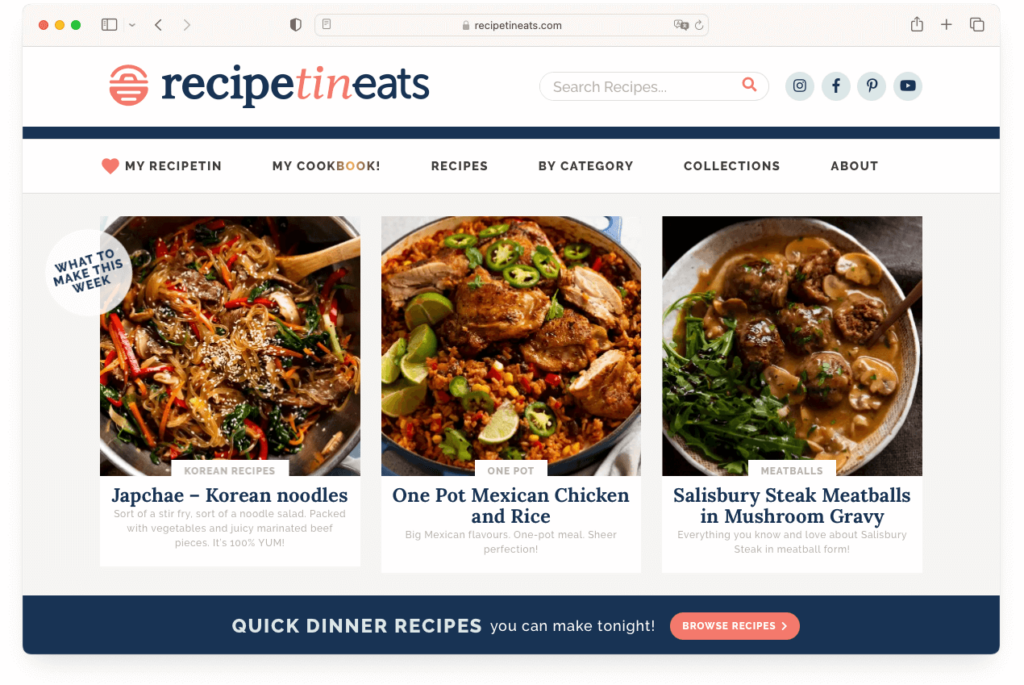
RecipeTin Eats, created by Nagi Maehashi in Australia, reportedly earns over $1 million annually, with the majority coming from display advertising. What’s interesting about RecipeTin Eats is that Nagi built most of her traffic through organic search and reached six-figure annual revenue within her first year of blogging.
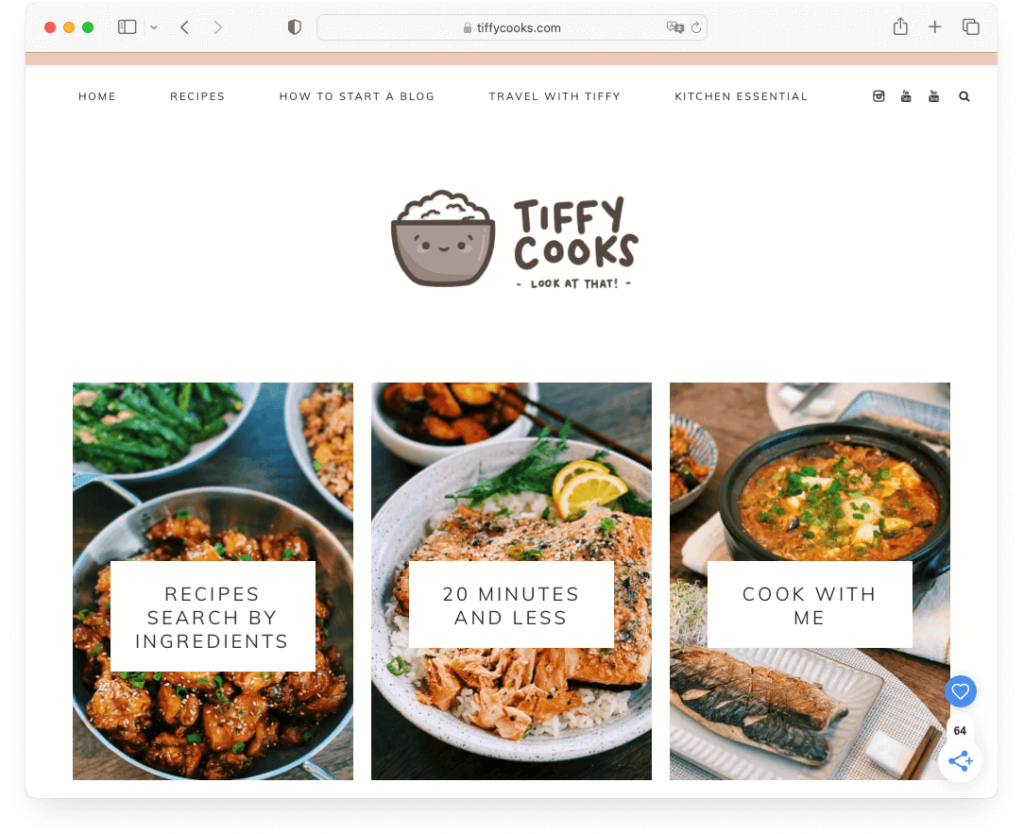
Tiffy Cooks reported earning $17,000–$22,000 per month as of late 2021, with about 40–50% coming from website ads and the rest from brand deals, merchandise, and affiliate links. Later in 2021, those figures reportedly climbed to $45,000–$55,000 per month. What’s remarkable is the speed: Tiffy started her blog in 2019 with no culinary background, and hit five-figure months by December 2020 — roughly 14 months in.
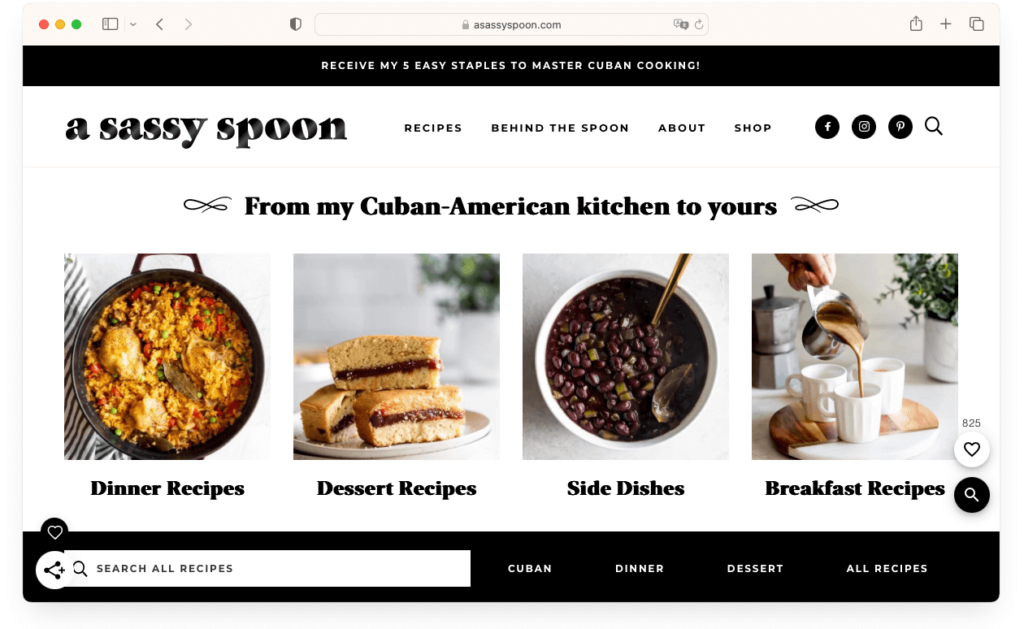
A Sassy Spoon, a Cuban-American food blog, averages $24,000–$30,000 per month in gross income (as of December 2023). The blog’s founder started in 2016 and reports that display ads alone generate multi-six figures annually from over 4 million page views per year.
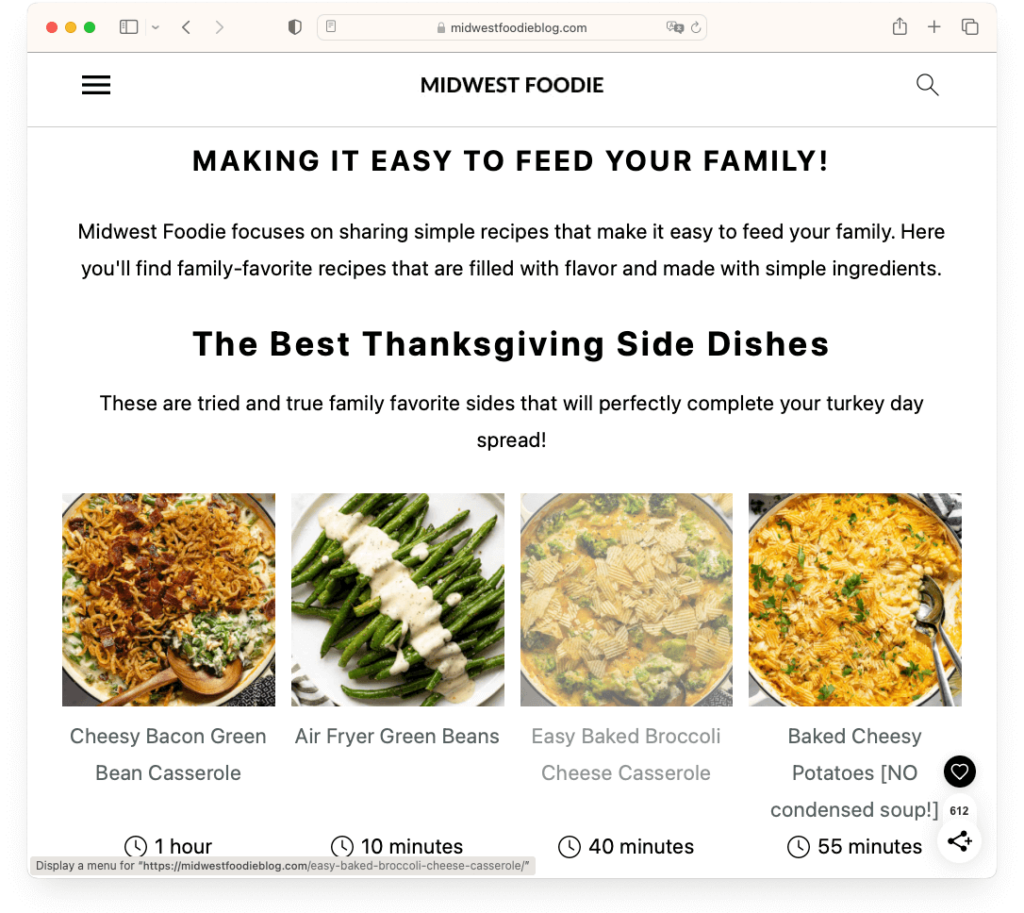
The Midwest Foodie Blog reported $64,270 in income for just the first quarter of 2022, roughly $21,000 per month, from a combination of ads, affiliate links, eBooks, and sponsored posts.
Mid-Tier Earners ($5,000–$15,000/month)
Rich and Delish earned $10,478 in January 2024 from 467,745 page views, an RPM of $24.12 per 1,000 page views. The blog’s creator started in 2021 at age 20, with no blogging experience, and invested in food photography courses, SEO training, and a new camera early on. Most of the income comes from blog ads and affiliate marketing. This example is especially useful because it shows the exact math: at roughly 470,000 monthly page views with a $24 RPM, you land at about $10,000 per month.
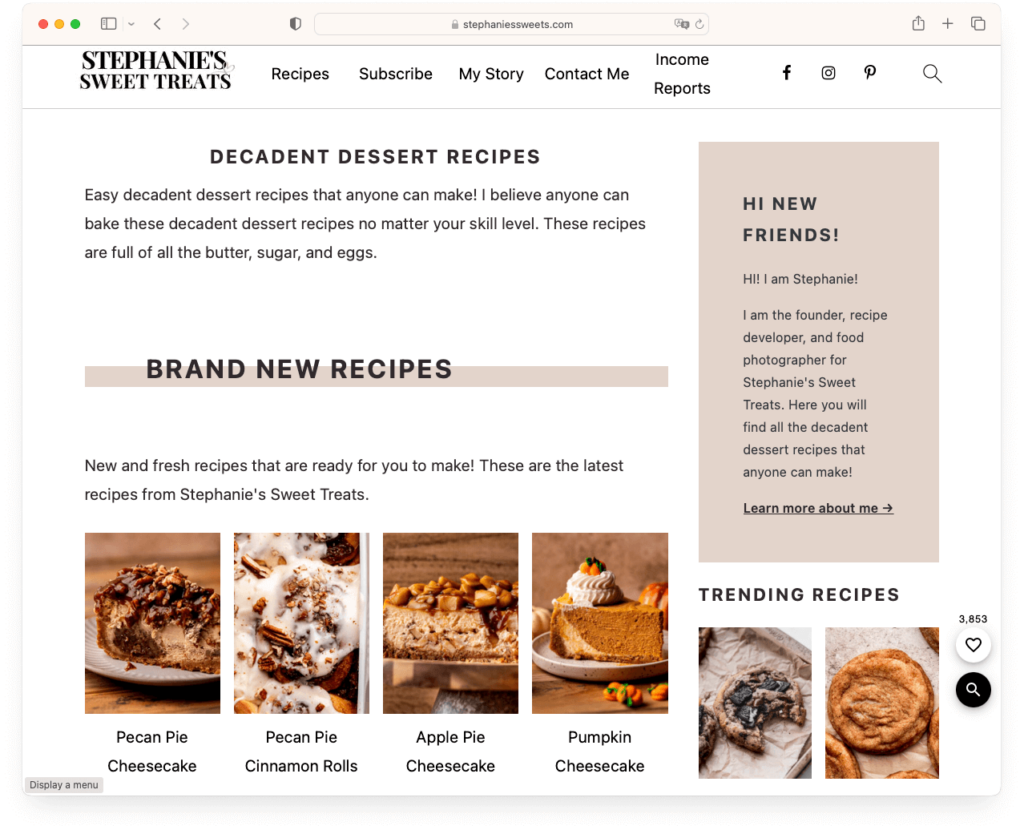
Stephanie’s Sweet Treats reported monthly earnings ranging from $4,739 to $9,296 in the first quarter of 2022, coming from Amazon affiliate income, brand sponsorships, coaching, and ad revenue.
Bites by Bianca earned $77,000 in 2023 (about $6,400/month) during her first full-time year as a food blogger, with the majority coming from paid brand partnerships. Her 2024 income dipped, but she secured $49,000 in brand deals before February 2025, showing the year-over-year volatility that’s common in food blogging.
Growth-Stage Bloggers (The Journey to $5,000/month)
Piping Pot Curry offers one of the most transparent month-by-month growth trajectories available. Meeta Arora started the Indian recipe blog in February 2017 and went full-time about seven months later. Her first months on Google AdSense earned almost nothing. The turning point came when she switched to AdThrive (now Raptive), ad income jumped from a few hundred dollars to $5,110 per month by August 2018. Of that, $4,784 came from display ads and $326 from Amazon Associates. The takeaway: her income was stuck in low gear until she qualified for a premium ad network, then it accelerated quickly.
Get On My Plate (Casey Rooney of The Blogging Lifestyle) earned just over $2,000 in her first month on Mediavine in December 2021, with most of that coming from sponsored posts rather than ads. One year later, she was earning over $15,000 per month, primarily from ad income. Her trajectory illustrates how quickly earnings can scale once you’re on a premium ad network and publishing consistently.
These examples show the full range. A blog earning $5,000 per month is a legitimate part-time income. A blog earning $20,000+ per month is a serious business. And a handful of blogs reach the million-dollar-plus level, but usually after years of consistent work. The growth-stage examples are just as important: they show that the early months are slow for everyone, and the ad network upgrade is often the single biggest income inflection point.
Where Does Food Blog Income Come From?
Food bloggers rarely depend on a single revenue source. The most successful ones stack multiple income streams, though the mix varies based on blog size and strategy.
Display Advertising (42–44% of Revenue)
Display ads are the biggest revenue source for most food bloggers. These are the banner, sidebar, and in-content ads managed by ad networks like Mediavine, Raptive, or Google AdSense. You earn money based on page views; more visitors to your recipes means more ad impressions and more revenue.
The key metric here is RPM (revenue per 1,000 page views), which tells you how much you earn for every thousand people who visit your site. Food blog RPMs typically range from $12 to $30 with premium ad networks, though they can spike higher during Q4 (October through December) when advertisers spend more for holiday campaigns. For a real-world example, Rich and Delish reported an RPM of $24.12 in January 2024, meaning every 1,000 page views generated about $24 in ad revenue.
Affiliate Marketing (~10% of Revenue)
Affiliate marketing means earning a commission when readers buy products through links on your blog. For food bloggers, the most common affiliate programs include Amazon Associates (for kitchen tools, cookware, appliances), ingredient delivery services, and cooking courses.
The commissions are usually small per sale, often 1–10%, but they add up when you have strong traffic and mention products naturally within your recipes.
Sponsored Content and Brand Deals
Brand partnerships involve creating content that features a company’s product. A food blogger might develop a recipe using a specific brand of olive oil, for example, and get paid a flat fee for the post.
Rates vary wildly. A newer blogger with 10,000 Instagram followers might charge $200–$500 per sponsored post. An established blogger with 100,000+ page views could charge $2,000–$10,000 or more per collaboration. Some top-tier food bloggers earn the majority of their income from brand deals alone.
Digital Products
eBooks, printable meal plans, online cooking courses, and recipe collections are popular digital products for food bloggers. These have high margins since you create them once and sell them repeatedly. A well-made recipe eBook priced at $12–$25 can generate meaningful passive income if your blog has steady traffic.
Freelance Services
Many food bloggers earn additional income through freelance recipe development ($100–$500+ per recipe), food photography for restaurants or brands, and content writing for other food publications.
Coaching and Consulting
Experienced food bloggers sometimes offer coaching to newer bloggers on topics like SEO, food photography, or blog monetization. Consulting rates can range from $100–$500+ per hour, making this a high-value income stream for bloggers with proven results.
How Display Ads Drive Food Blog Revenue
Since display advertising generates nearly half of all food blog income, it’s worth understanding how it works in detail.
How Ad Networks Work
Ad networks act as the middleman between your blog and advertisers. They manage ad placement, optimize which ads appear, and handle payments. In exchange, they take a percentage of the ad revenue (typically 25–35%).
The network you work with makes a big difference in your earnings. Here’s how the major options compare:
| Ad Network | Minimum Requirements | Typical Food Blog RPM | Best For |
|---|---|---|---|
| Google AdSense | No minimum traffic | $2–$8 | Beginners with low traffic |
| Mediavine | 50,000 sessions/month | $12–$30 | Mid-size food blogs ready to scale |
| Raptive (formerly AdThrive) | 100,000 pageviews/month | $15–$35+ | High-traffic food blogs seeking top rates |
The jump from Google AdSense to a premium network like Mediavine can increase your ad revenue by 500% or more at the same traffic level. This is why reaching that 50,000-session threshold is such a significant milestone for food bloggers. Piping Pot Curry’s income data illustrates this perfectly; her earnings were stuck at a few hundred dollars per month on AdSense, then jumped to over $4,700 per month almost immediately after switching to AdThrive (now Raptive).
What Affects Your RPM
Not all page views are worth the same amount. Several factors influence how much advertisers pay to show ads on your site:
Geographic audience matters. US-based traffic commands the highest RPMs because American advertisers pay more per impression. A food blog with 80% US traffic will earn significantly more than one with 80% international visitors. This is also why Raptive and Mediavine both require that the majority of your traffic comes from the US, Canada, UK, Australia, or New Zealand.
Seasonality swings are real. Advertisers increase spending dramatically in Q4 (October through December) for holiday campaigns. Many food bloggers report RPMs that are 2–3 times higher in November and December compared to January and February. Don’t be surprised if your January income drops by 40–50% from December.
Content length affects ad density. Longer blog posts can display more ads per page. A 2,000-word recipe post with step-by-step photos will show more ad impressions than a 500-word post, directly increasing your per-page revenue.
How Much Traffic Do You Need to Make Money?
Traffic and income are directly correlated for food bloggers, especially when display ads are your primary revenue source. Here’s a rough guide:
| Monthly Page Views | Estimated Monthly Ad Revenue | Ad Network Tier |
|---|---|---|
| Under 10,000 | $10–$50 | Google AdSense |
| 10,000–25,000 | $50–$200 | Google AdSense or Ezoic |
| 25,000–50,000 | $200–$600 | Ezoic or approaching Mediavine |
| 50,000–100,000 | $600–$2,500 | Mediavine |
| 100,000–500,000 | $2,500–$12,500 | Mediavine or Raptive |
| 500,000–1,000,000 | $10,000–$30,000 | Raptive |
| 1,000,000+ | $25,000+ | Raptive |
These estimates assume a food blog with primarily US traffic and RPMs in the $12–$30 range on a premium ad network. Actual numbers will vary based on niche, seasonality, and audience demographics.
The critical takeaway: your ad network threshold is the most important traffic milestone. Getting from 0 to 50,000 monthly sessions (the Mediavine minimum) is the leap that transforms a food blog from a hobby into a potential income source. The RankIQ survey confirms this; the point at which blog income increases significantly is at the 50,000 monthly sessions mark.
Where Does Food Blog Traffic Come From?
For most successful food blogs, the traffic breakdown looks something like this:
- Organic search (Google): 60–80% of total traffic. This is why SEO is so important for food bloggers.
- Pinterest: 10–20% for blogs that invest in Pinterest marketing.
- Social media (Instagram, Facebook, TikTok): 5–15%, usually more for newer bloggers.
- Direct and email: 5–10%, increasing as a blog builds loyal readers.
Since organic search drives the majority of food blog traffic, SEO skills are as important as cooking skills for bloggers who want to earn a real income. That means keyword research, proper recipe formatting, and recipe schema markup all play a direct role in how much money a food blog can make.
What Affects How Much a Food Blogger Earns?
Beyond traffic volume, several factors determine whether a food blog earns $500 or $50,000 per month.
Niche Selection
Not all food niches are equally profitable. Niches with higher-ticket affiliate products (like kitchen appliances or premium ingredients) tend to earn more per visitor. Similarly, niches that attract a US-based audience consistently command higher ad rates.
Some food blog niches that tend to perform well include healthy eating and special diets (keto, gluten-free, vegan), baking and desserts, meal prep and budget cooking, and cuisine-specific blogs that serve an engaged community.
Number of Published Recipes
More recipes means more pages indexed in Google, which means more potential search traffic and ad impressions. Food bloggers who consistently publish 2–4 optimized recipes per week grow their traffic (and income) faster than those who post sporadically.
Think of each recipe post as a potential doorway from Google to your site. The more doors you have, the more visitors you attract.
SEO and Technical Optimization
Food blogs that invest in SEO consistently outperform those that don’t. This includes keyword research to find recipes people are searching for, proper heading structure, optimized images with descriptive alt text, and recipe schema markup that enables Google rich results.
When your recipes appear as rich results in Google, with star ratings, cook times, and calorie counts displayed directly in search, you get higher click-through rates, more traffic, and ultimately more revenue. A good recipe card plugin handles most of the schema markup automatically, so you don’t need to write code.
Monetization Strategy
A food blogger with 200,000 monthly page views who relies solely on Google AdSense might earn $800 per month. That same blogger on Mediavine with affiliate links and occasional sponsored content could earn $5,000–$8,000 per month. Same traffic, very different income.
The bloggers who earn the most typically combine 3–5 income streams: a premium ad network for base revenue, targeted affiliate partnerships, selective brand deals, and some form of digital product.
Content Quality and Photography
Food blogging is intensely visual. Blogs with professional-quality food photography consistently attract more page views, longer time on site, higher RPMs (because advertisers prefer premium environments), and more brand deal opportunities.
You don’t need a professional studio, but investing in basic photography skills, good natural lighting, clean backgrounds, and step-by-step process shots directly impacts your earning potential. For tips on finding recipe inspiration for your food blog, a creative approach to content development helps maintain quality as you scale.
How Long Does It Take to Start Earning?
This is the question every aspiring food blogger wants answered, and the honest answer isn’t always encouraging.
Months 1–6: Most food blogs earn little to nothing. You’re building your content library, learning SEO, and growing traffic from zero. It’s common to earn under $50 per month during this phase, if anything at all. Piping Pot Curry’s month-by-month data confirms this; her first several months on Google AdSense earned almost nothing despite consistent publishing.
Months 6–12: With consistent publishing (2–4 posts per week) and basic SEO, some bloggers reach 10,000–30,000 monthly page views. Ad revenue might reach $50–$200 per month with Google AdSense.
Year 1–2: This is where many bloggers hit the Mediavine threshold (50,000 sessions) and see their income jump significantly. Monthly earnings of $500–$3,000 become realistic. Casey Rooney of Get On My Plate earned about $2,000 in her first month on Mediavine and scaled to over $15,000 per month just one year later.
Year 2–3: Established bloggers with 100,000+ monthly page views and multiple income streams commonly earn $3,000–$10,000 per month. Rich and Delish hit this level after about three years of blogging, reaching $10,478 in a single month with a $24.12 RPM.
Year 3–5+: Full-time income becomes achievable for dedicated bloggers. Monthly earnings of $10,000+ are realistic for blogs with strong SEO, premium ad placement, and diversified revenue.
The bloggers who reach full-time income fastest typically share a few characteristics: they treat it as a business from day one, they invest in learning SEO early, they publish consistently (not sporadically), and they upgrade their ad network as soon as they qualify. Tiffy Cooks is the extreme example, reaching five-figure months within 14 months, but she also combined an active social media presence with her blog from the start.
Quick Tip: Many successful food bloggers kept their day jobs for 1–2 years while building their blogs. Don’t quit your job to start a food blog. Build the blog, wait for sustainable income, then make the transition.
Food Blogger Expenses: What Cuts Into Your Earnings
When food bloggers share income numbers, they’re usually talking about gross revenue, not what they take home after expenses. Here’s what a typical food blog costs to operate:
Essential Costs
- Web hosting: $20–$100/month for quality hosting
- Domain name: $10–$15/year
- WordPress theme: $50–$200 one-time or $50–$150/year for premium food blog themes like Foodica
- Recipe plugin: Free to $69/year for premium features (a recipe card plugin with schema markup is essential)
- Email marketing: $0–$50/month, depending on list size
- SEO tools: $20–$100/month
Variable Costs
- Groceries for recipe development: $200–$800/month (this adds up quickly)
- Photography equipment: $500–$3,000 initial investment (camera, lenses, lighting)
- Props and styling: $50–$200/month for plates, backgrounds, linens
- Virtual assistant or contractor: $500–$3,000/month (common once you’re earning $5,000+/month)
- Courses and education: $200–$2,000/year for SEO, photography, and business courses
Don’t Forget Taxes
As a self-employed food blogger, you’re responsible for income tax plus self-employment tax (15.3% in the US for Social Security and Medicare). Many bloggers are surprised by their first tax bill. A general rule: set aside 25–30% of your gross income for taxes.
All in, a food blog generating $5,000/month in gross revenue might net $2,500–$3,500 after expenses and taxes. At $20,000/month gross, you might keep $12,000–$15,000. The margins improve as you scale because many costs are relatively fixed.
How to Increase Your Food Blog Income
If you’re already food blogging and want to earn more, here are the highest-impact strategies based on what actually moves the needle:
1. Upgrade Your Ad Network
If you’re on Google AdSense and have over 50,000 monthly sessions, apply to Mediavine immediately. This single change can increase your ad revenue by 5–10x. If you’re already on Mediavine and have surpassed 100,000 monthly pageviews, consider whether Raptive might offer better rates.
2. Invest in SEO
More organic traffic means more ad revenue, more affiliate clicks, and more brand visibility. Focus on keyword research to find recipe topics with decent search volume and manageable competition. Make sure every recipe post has proper heading structure, optimized meta descriptions, and formatted recipe cards with schema markup.
Search engines favor recipe content that uses structured data, which helps your posts appear as rich results in Google. Rich results, the ones with star ratings, cook times, and recipe photos directly in search results, get significantly higher click-through rates than standard listings.
3. Publish More (Strategic) Content
Each published recipe is a potential traffic source. But quality matters more than quantity. Focus on recipes that people are actively searching for, not just what you feel like cooking. Use keyword research tools to find gaps in your content library.
Building recipe collections and content clusters around related topics (for example, 20 chicken dinner recipes linked to individual chicken recipe posts) strengthens your site’s topical authority and improves rankings across related searches.
4. Add Affiliate Links Naturally
Don’t just sprinkle Amazon links everywhere. Think about what your readers actually need. If you’re posting a bread recipe, link to the specific stand mixer, bread flour, or Dutch oven you genuinely use. Authentic recommendations convert better than generic product lists.
5. Pursue Brand Partnerships Selectively
Once you have consistent traffic and a professional-looking blog, reach out to brands that align with your niche. Start by using products you already love and tagging brands on social media. Many food bloggers land their first brand deals through Instagram rather than their blog.
6. Create at Least One Digital Product
An eBook, printable meal plan, or mini cooking course gives you a revenue stream that doesn’t depend on traffic or ad rates. Even a simple $9 recipe collection PDF can generate meaningful income if promoted consistently to your email list.
FAQ
Yes, but it takes time. Most food bloggers who earn a full-time income have been blogging consistently for 2–5 years. A full-time income from food blogging ($4,000–$10,000+ per month) is realistic once you reach 100,000+ monthly page views, join a premium ad network, and develop multiple income streams. It’s not a quick path, but it’s a proven one.
Most beginner food bloggers earn between $0 and $500 per month during their first year. Earnings depend heavily on how quickly you grow traffic and which ad network you use. Bloggers who focus on SEO from the start and publish consistently tend to reach monetization milestones faster.
Based on publicly available data, Pinch of Yum reported $10.5 million in revenue in 2021, making it one of the highest-earning food blogs ever documented. RecipeTin Eats reportedly earns over $1 million annually, primarily from display advertising. These are outliers, but they demonstrate what’s possible with a large, SEO-driven audience.
Food blogging remains profitable, though the landscape has changed. Google algorithm updates since 2023 have affected some food blogs, and AI-generated search results are shifting how traffic flows. However, food blogs with strong brands, quality content, and proper technical SEO (including recipe schema markup) continue to perform well. The RankIQ survey found food to be the most profitable blogging niche overall.
On a premium ad network like Mediavine with RPMs of $15–$25, you’d need roughly 40,000–67,000 monthly page views to earn $1,000 from ads alone. Adding affiliate income and occasional sponsored posts can lower that traffic requirement. On Google AdSense (with RPMs of $3–$8), you’d need 125,000–333,000 monthly page views for the same revenue, which is why upgrading your ad network matters so much.
Yes, in most cases. Grocery costs are one of the biggest ongoing expenses for food bloggers, typically ranging from $200 to $800 per month, depending on how often you publish and what type of recipes you create. Some established bloggers receive free products from brands, but this usually only offsets a portion of total grocery spending. The good news: groceries for recipe development are a tax-deductible business expense.
Both matter, but monetization strategy has a bigger multiplier effect. A blog with 100,000 monthly page views on Google AdSense might earn $400/month. The same blog on Mediavine could earn $2,000–$3,000/month. Add affiliate links and a digital product, and that number could reach $4,000–$5,000. Traffic growth is essential, but optimizing how you monetize existing traffic often produces faster income gains.
The primary traffic source for successful food blogs is organic search through Google, typically accounting for 60–80% of total visits. This is why SEO skills (keyword research, proper recipe formatting, and structured data markup) are critical. Pinterest is the second-largest traffic source for many food blogs, followed by social media platforms like Instagram and TikTok. Building an email list also generates reliable direct traffic over time.
Start Building Your Food Blog Income
Food blogging isn’t a get-rich-quick scenario, but the numbers show it’s a legitimate business opportunity. The median food blogger income of $9,169 per month puts it among the most profitable blog niches, and the top earners prove there’s no hard ceiling.
The path is straightforward, even if it’s not fast: publish quality recipes consistently, learn SEO, get on a premium ad network as soon as you qualify, and diversify your income streams over time.
If you’re just starting out, focus on two things above all else: great recipes with great photos and SEO fundamentals that help people find them. Everything else, the brand deals, the digital products, the coaching income, builds on that foundation.
Ready to build a food blog that earns? Start with the right tools. Recipe Card Blocks handles recipe formatting, schema markup, and SEO optimization so you can focus on what matters most: creating recipes people love.
Related reading:
- How to Start a Food Blog — Step-by-step guide for beginners
- How to Make a Recipe Website — Technical setup and optimization
- Recipe Format Types: Which One is Best for Your Blog? — Choosing the right recipe structure
- How to Become a Food Writer — From passion to profession
- Recipe Card Blocks vs WP Recipe Maker — Plugin comparison for food bloggers