Browse our selection of beautiful, feature-packed WordPress themes below to find exactly what you’ve been looking for!
Recipe Card Blocks powers the structured recipe content on hundreds of thousands of WordPress sites. The block handles recipe schema, ratings, print-friendly output and nutrition data — but the theme around it still decides how your site feels to readers, how quickly it loads, and how well your recipes actually rank.
The themes below are the five we build and maintain ourselves at WPZOOM. Every one of them is tested against Recipe Card Blocks on every plugin release, so the recipe card inherits your typography, spacing and colors automatically instead of looking like a bolted-on widget. They're all built for the block editor, pass Core Web Vitals on a standard host, and don't ship bloated page builders you have to fight later.
What follows isn't a scraped feature list — it's our honest take on which theme suits which kind of food blog, including the trade-offs. If you're deciding between them, skip to Which should I pick? below.
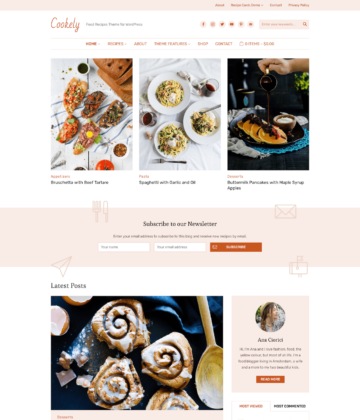
Cookely hits the sweet spot for people starting a food blog in 2026 — warm but modern, Gutenberg-first, and light enough that it won't tank your PageSpeed score before you've published your first recipe. It's the theme we'd hand a friend who just registered a domain and asked where to start.
Recipe Card Blocks looks genuinely native here — the block's rounded corners and default spacing line up with Cookely's aesthetic, so you don't need to touch CSS to make the recipe card feel like part of the post. The trade-off: it's deliberately less "magazine" than Foodica, so if you're planning a 500-recipe archive with heavy taxonomy, you may outgrow it.
Who it's for: new and intermediate food bloggers, personal recipe sites, anyone who wants a modern look without design decisions.
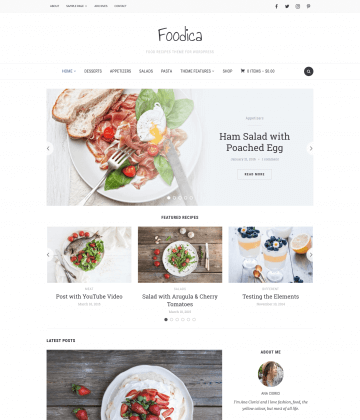
Foodica is the theme most people picture when they think "classic WPZOOM food blog" — a magazine-style layout with a prominent featured post slider, categorized sections on the homepage, and generous space for food photography. It's been around long enough that it's been battle-tested on sites with thousands of recipes, which matters when your archive starts getting deep.
Paired with Recipe Card Blocks, the card picks up Foodica's serif headings and soft neutrals without extra styling. The trade-off: Foodica leans editorial and dense, so if your content is a handful of recipes and a personal story, it can feel a little oversized. It shines when you have categories to fill.
Who it's for: bloggers with deep archives, multi-author sites, anyone who wants a "food magazine" feel over a personal journal.
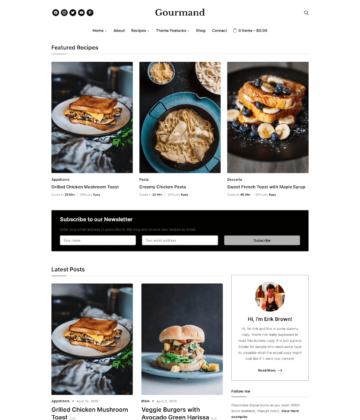
Gourmand is the quiet one in the lineup — cleaner typography, more whitespace, and a homepage that lets a single hero image carry the first impression instead of cramming four categories above the fold. If you care about how your food photography looks more than about squeezing another sidebar widget in, this is the one.
Recipe Card Blocks drops into Gourmand without fighting the layout. Because the theme is restrained, the recipe card itself becomes the visual anchor of the post, which is exactly what you want for SEO and readability. The trade-off: there's less "furniture" out of the box — fewer homepage sections, fewer widget zones — so if you like to tinker, you'll add your own.
Who it's for: photography-driven bloggers, minimalist designers, anyone who wants the recipe and the image to do the talking.
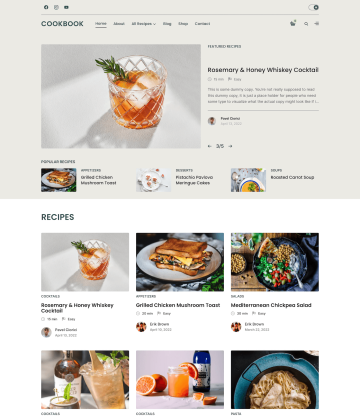
CookBook is the most recipe-centric of the five. Where the others put a blog post feed front and center, CookBook's homepage is built around browsing recipes — filters, categories, and visual indexes instead of a chronological stream. If your readers come to cook, not to read, this is the structure you want.
Because it's designed around recipe content specifically, its integration with Recipe Card Blocks is tight — ingredient lists, cook times, and ratings all pick up theme styles without any tweaking. The trade-off: CookBook is opinionated. If you also want to run a strong personal-blog or lifestyle side, one of the magazine-style themes above gives you more room.
Who it's for: recipe-archive-led sites, cookbook authors, sites where recipes outnumber narrative posts 10-to-1.
Foodie Blocks is our Full Site Editing theme — the only one on this list built entirely around WordPress's block editor for the whole site, not just the post content. Headers, footers, templates and archive pages are all edited visually with blocks, so if you've ever wanted to move your logo or restructure a category page without touching code or a theme builder, this is the one that lets you.
With Recipe Card Blocks, the pairing feels natural: both are block-native, so the recipe card inherits global styles (colors, typography, spacing) from the Site Editor automatically. The trade-off: FSE is still a newer WordPress workflow. If you're used to the classic Customizer and want to "set it and forget it," one of the traditional themes above will feel more familiar day-to-day.
Who it's for: bloggers who want modern WordPress, design-minded users who like customizing everything via blocks, anyone planning to grow with the block editor.
| Theme | Best for | Style | Homepage structure |
|---|---|---|---|
| Cookely | New food bloggers | Warm, modern | Standard blog feed |
| Foodica | Established food magazines | Classic magazine | Multi-category homepage |
| Gourmand | Photography-first blogs | Minimalist, editorial | Hero image-led |
| CookBook | Recipe-archive-led sites | Cookbook-inspired | Recipe-browsing focus |
| Foodie Blocks | Block editor power users | Block-first, modern | Fully customizable via FSE |
If you're still deciding, here's the shortest honest answer:
Whichever you pick, Recipe Card Blocks works the same. The difference is how the page around the recipe feels — and that's worth getting right, because it's the part Google, your readers, and your future self all see every day.
There are thousands of WordPress themes that can display a recipe card. We maintain these five because we built them alongside Recipe Card Blocks, which means every plugin release is tested against them and every theme update is tested against the plugin. If the recipe card ever renders weirdly, it's one team's problem to fix — ours.
That's also why this list lives on recipecard.io and not somewhere else. These aren't the "best WordPress food blog themes" in the abstract — they're the themes that will keep working with Recipe Card Blocks for as long as the plugin exists.